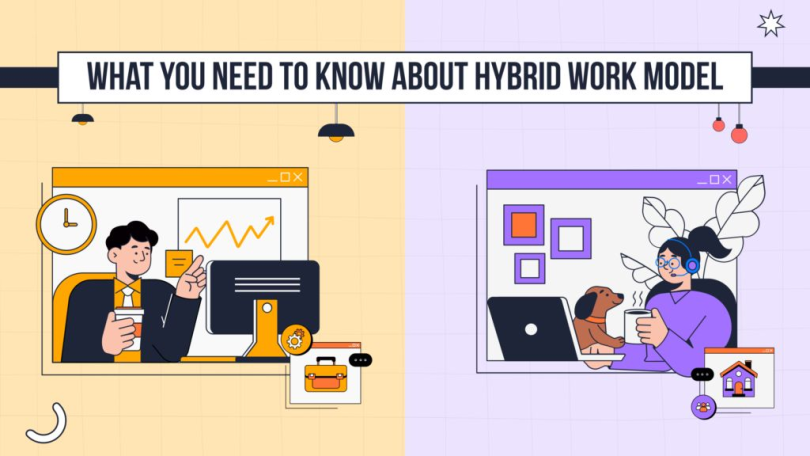


The remote work argument has quietened, and in the quiet, the actual settlement is becoming visible. The pandemic-era extremes — everyone home forever, or everyone back by September — both lost. What is replacing them is less dramatic and more durable: hybrid patterns tuned by job type, offices redesigned around collaboration rather than rows of desks, and a slow professionalisation of asynchronous work. Understanding how remote work is changing now matters less as a culture-war topic and more as practical career intelligence: where the expectations are landing determines how you plan your week, your skills and even where you can afford to live.
The Settlement: Two to Three Office Days, With Anchors
Across large employers, the converging pattern is two to three in-office days per week for roles that can be done remotely at all — but the detail that matters is the anchor day: teams increasingly share one or two fixed common days when everyone is in, rather than scattering attendance so thinly that the office never delivers its one real benefit, being together. Companies learned that hybrid without overlap buys the costs of both models and the benefits of neither. Individual flexibility survives inside the pattern — start times, focus days at home, seasonal variations — but the era of purely personal schedules at big firms is closing. Fully remote roles persist, concentrated in software, specialist functions and smaller companies competing for talent they cannot out-bid on salary, now a stable minority rather than the default future once predicted.
Async Work Is Growing Up
The deeper change is not location but timing. Mature remote organisations discovered that replicating the office day on video — back-to-back calls across time zones — burned people out while producing less than the office did. The correction now spreading is asynchronous-first communication: decisions written up in documents instead of meetings, updates posted rather than presented, meetings reserved for disagreement, brainstorming and trust-building, with agendas and written pre-reads. This is a skill shift with career consequences. Writing clearly becomes a core professional competency rather than an administrative one; the employee whose documents decide things gains the influence that used to belong to the best talker in the meeting room. It also quietly changes time management: focused individual work — the kind our companion guide on how to set goals you will actually finish breaks into weekly actions — fits far more naturally into an async week than into a calendar of calls.
The Office Is Being Redesigned — and Shrunk
Walk into a recently refitted headquarters and the change is physical: fewer assigned desks, more bookable collaboration spaces, phone-booth pods for calls, social areas that look like cafés. Companies are leasing less space per employee and spending more per square metre on the parts that justify a commute. Location strategy is shifting too — satellite hubs in cheaper cities, hiring widened to national rather than metropolitan pools for many roles, and salaries increasingly set with explicit location policies instead of quiet negotiation. For workers, the practical upshot is that “where the job is” has become a genuine menu with trade-offs — hub city salary and density, or distributed flexibility and distance — rather than a single default answer for everyone.
Management Is the Bottleneck Being Retrained
Every survey of hybrid friction lands on the same layer: middle management. Judging by presence is easy and useless remotely; judging by outcomes requires clear goals, written expectations and trust built deliberately — precisely the management skills many systems never selected for. Companies are responding with training, but also with instrumentation: activity-monitoring software has grown alongside hybrid work, and remains its most contested frontier, with employees reading surveillance as distrust and employers reading it as the only visible control. The organisations settling best are generally those replacing monitoring with measurement — agreed deliverables, reviewed on a rhythm — while those leaning on surveillance report the predictable harvest of resentment, gaming and quiet attrition among exactly the experienced staff they most want to keep.
The Global Layer: Time Zones as a Feature
One more pattern is hardening quietly beneath the hybrid headlines: distributed hiring across time zones, used deliberately. Follow-the-sun support, design and engineering hand-offs, and documentation cultures built for colleagues who will read your work while you sleep are becoming standard practice at firms that operate internationally. The consequence for individuals cuts both ways. Competition for remote roles is now genuinely global, raising the bar in exactly the roles that offer the most freedom; simultaneously, a professional in a lower-cost region can access salaries that were geographically impossible a decade ago. The differentiators in this market are unglamorous and learnable: reliability across time zones, written clarity, and a visible record of finished work. Geography has not stopped mattering — it has started mattering differently, and the difference rewards people who plan for it.
What It Means for Your Next Few Years
Read the settlement as a set of planning assumptions. Expect hybrid as the default offer in most knowledge roles, with the schedule increasingly specified in the job advertisement itself. Invest in the skills the new model rewards: precise writing, self-managed focus, and fluent use of the standard collaboration stack. Protect the home setup as professional equipment — chair, light, bandwidth — because employers’ allowances have thinned even as expectations have not. And hold your plans loosely at the edges: the pattern is still settling, younger companies experiment at both extremes, and an individual’s leverage to negotiate their pattern rises steeply with scarce skills and a record of delivered outcomes. Knowing how remote work is changing will not hand anyone the perfect arrangement, but it replaces guessing with a map of where the ground is actually firming up — and careers are built better on firm ground.